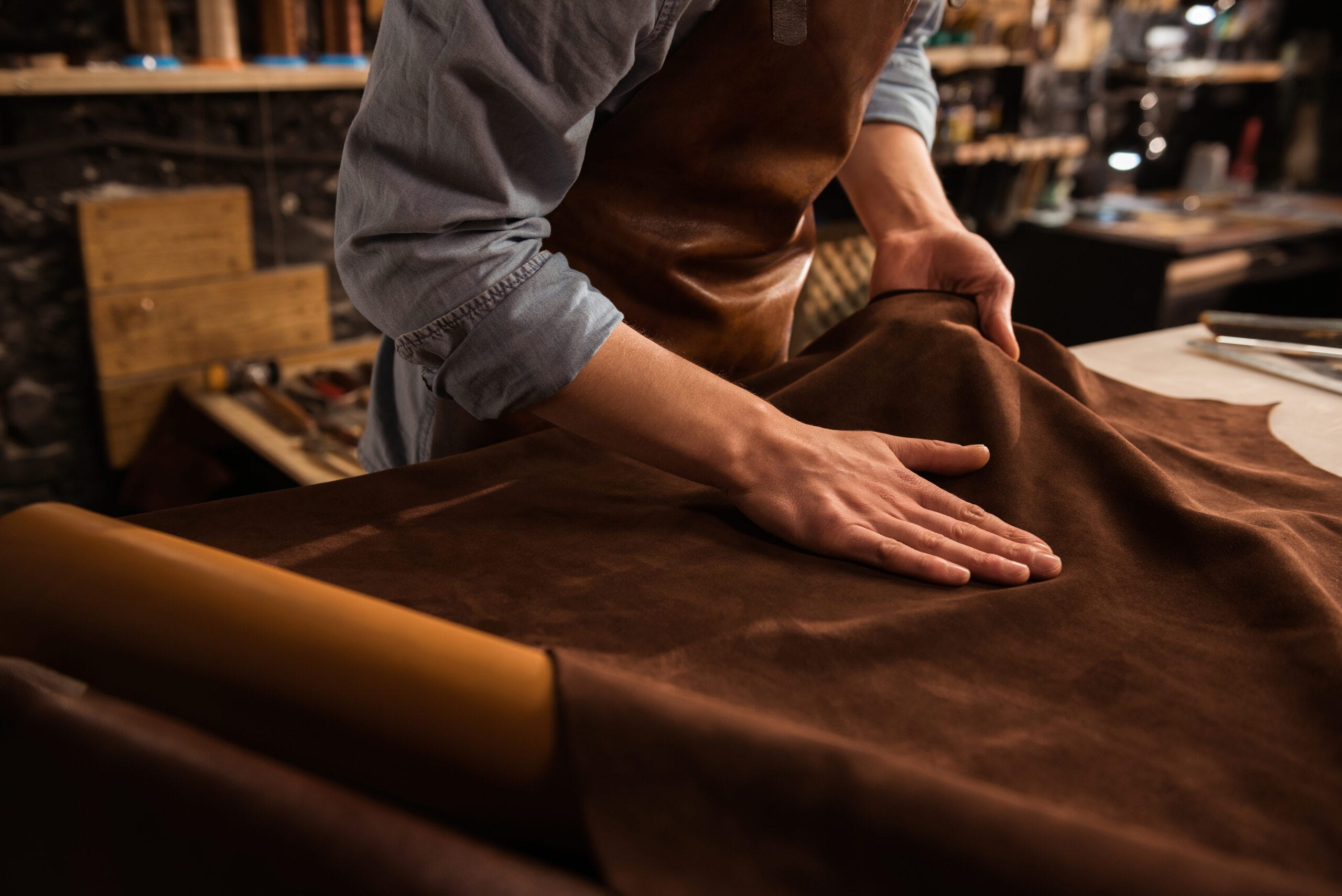
Creative solutions — from new tanning techniques to biofabricated leather and automation — are changing the leather industry for the better.
As one of the most versatile materials in the fashion and furniture sectors, leather has grown in popularity. But many people need to understand that producing leather has serious environmental consequences. Not only is the production of leather inefficient, but it also uses several dangerous chemicals that harm the environment. In this article, we’ll examine the environmental effects of leather production and how technology is helping to find solutions.
Leather production begins with farming and moves on to slaughtering, tanning, and finishing. Water usage throughout the leather-making process (soaking hides, removing tanning chemicals, and rinsing leather) is one of the industry’s most significant environmental issues. Research by Queen Mary University of London estimates that, on average, 16,600 liters of water are required to produce one kilogram of leather.
The amount of energy used in manufacturing leather is another environmental concern. Energy is needed to heat the water required to make leather and power the machinery. This energy is frequently produced from non-renewable resources such as coal and oil, which release greenhouse gases into the atmosphere.
In addition to harming the environment, the chemicals used in leather manufacturing also pose several health hazards. Many of these chemicals are poisonous and can damage the liver, kidneys, and skin, and can cause respiratory issues.
But technology is addressing many of the adverse environmental and health effects of leather production. New tanning techniques that employ less water and chemical agents are one example. Some businesses are also exploring alternatives to leather, such as plant-based materials.
The use of biotechnology also has a considerable impact on the leather industry. Living things such as bacteria, fungi, and algae are used in biotechnology to produce goods. In the case of leather, biotechnology is being used to create an eco-friendly, sustainable biofabricated leather.
Collagen, the protein that gives biofabricated leather its strength and durability, is grown in a lab as part of the process. To create a material that resembles leather in appearance and feel but causes considerably less environmental damage, this collagen is blended with plant-based elements such as pineapple leaves or mushrooms. Compared with conventional leather production, this method uses much less energy and water and no hazardous chemicals.
Automation is a different type of technology that helps mitigate the negative effects of leather production.
Automation reduces the amount of energy and water consumed in manufacturing leather. For instance, some businesses use automated systems to regulate humidity and temperature throughout the tanning process, reducing the energy needed to heat the water.
In conclusion, there are serious environmental challenges associated with manufacturing leather. However, technology is helping address many of these problems. Creative solutions are being developed to build a more sustainable, environmentally friendly leather industry — from new tanning techniques to biofabricated leather and automation. It is up to businesses and customers to adopt these technologies and change the world.
Sources:
The Queen Mary University of London
BioLeather
First published on Jul 5, 2023 (BlueDot Institute)
Thanks for reading Arinze Okigbo! Subscribe for free to receive new posts and support my work.